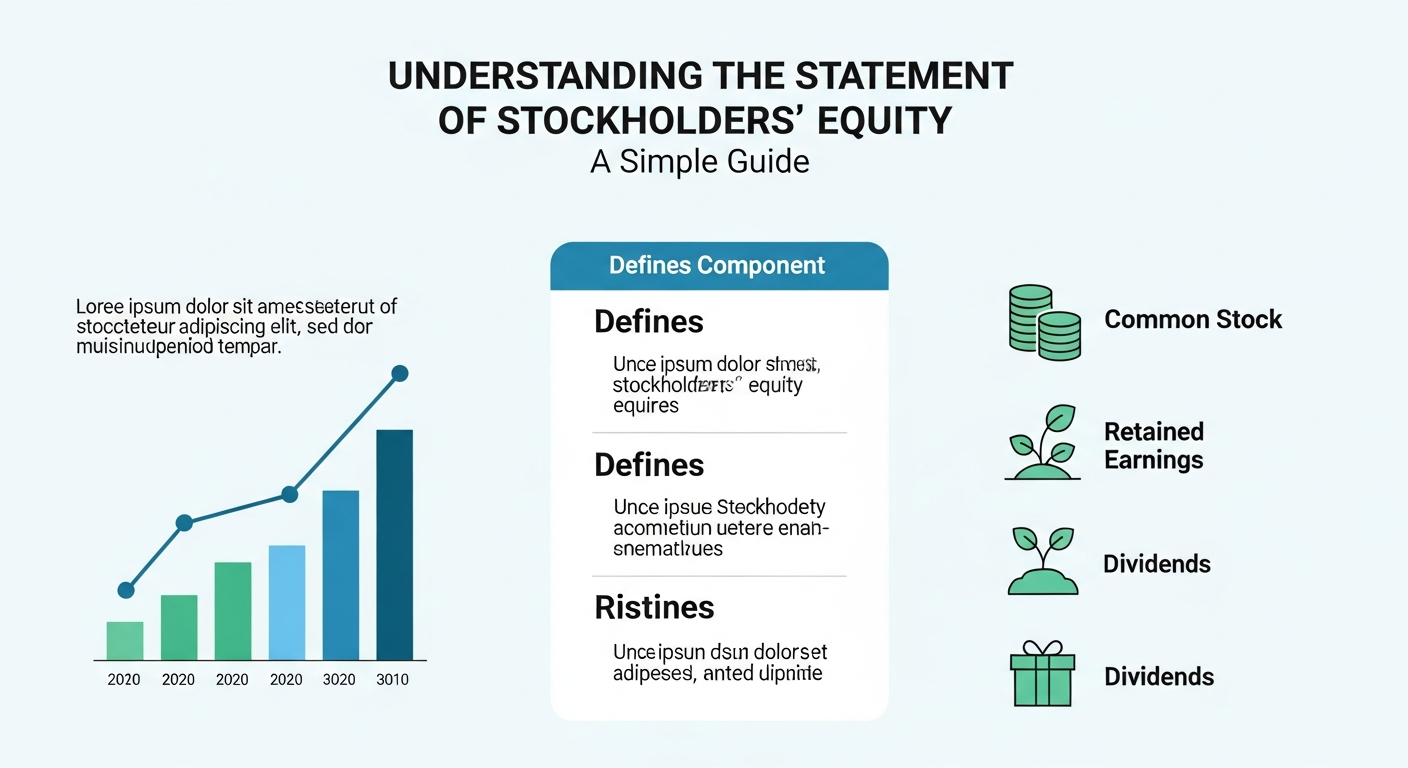
When you hear the term statement of stockholders’ equity, you might feel a bit confused. But don’t worry! It’s easier to understand than it sounds. This important financial report shows how a company’s ownership changes over time. It helps investors and managers see what is happening with the company’s money that belongs to its owners, called stockholders.
Think of it like a report card for a company’s owners. It tells the story of how much the owners’ shares are worth, how much money the company keeps from profits, and what new shares were sold. This guide will help you learn what this statement includes, why it is important, and how you can use it to understand a company better.
What Is the Statement of Stockholders’ Equity?
The statement of stockholders’ equity is a financial report that shows changes in the equity section of a company’s balance sheet. Equity means the owners’ share in the company after debts are paid. This statement tracks things like new stock sales, dividends paid, and profits kept in the business (called retained earnings). It gives a clear picture of how the value for shareholders grows or shrinks over time.
Key Components of the Statement of Stockholders’ Equity
There are several parts in this statement. The main ones include:
- Common Stock: The money shareholders paid to buy company shares.
- Retained Earnings: Profits the company keeps instead of paying out as dividends.
- Additional Paid-in Capital: Extra money investors pay over the stock’s face value.
- Treasury Stock: Shares the company bought back from the market.
- Accumulated Other Comprehensive Income: Gains or losses not shown in profit but affect equity.
Each of these parts tells a different story about the company’s finances and owner value.
Why Is the Statement of Stockholders’ Equity Important?
This statement helps investors understand how a company uses its profits and resources. For example, it shows if the company is paying dividends or saving money for future growth. It also reveals if new shares are issued or if the company buys back its shares, which can affect stock price and control.
Managers use it to make smart decisions. Investors use it to check the company’s health and future potential. It adds trust and transparency to financial reporting, which is why it is a must-have in annual reports.
How Does the Statement Connect with Other Financial Reports?
The statement of stockholders’ equity links closely with the balance sheet and income statement. The income statement shows the company’s profit or loss. Part of this profit moves into retained earnings on the equity statement. The ending balance from the equity statement then shows up in the equity section of the balance sheet.
So, these three reports work together like puzzle pieces, showing a full picture of a company’s financial health.
Real Example of a Statement of Stockholders’ Equity
Imagine a company called “Sunny Toys.” At the start of the year, it had $100,000 in common stock and $50,000 in retained earnings. During the year, it made $30,000 in profit and paid $10,000 as dividends. It also sold new stock worth $20,000.
The statement of stockholders’ equity would show:
- Starting equity: $150,000
- Add profit: +$30,000
- Subtract dividends: -$10,000
- Add new stock sold: +$20,000
- Ending equity: $190,000
This helps shareholders see their value increased from $150,000 to $190,000.
How to Read the Statement of Stockholders’ Equity
Look for the changes in each component. Are retained earnings going up? That means the company is making money and keeping it. Are dividends rising? It means the company is sharing profits with owners. Did the company buy back shares? This usually means the company thinks its shares are valuable.
By watching these changes, you can understand how the company manages its money and rewards its owners.
Common Terms Related to Stockholders’ Equity
- Dividends: Payments made to shareholders from profits.
- Stock Issuance: When a company sells new shares to investors.
- Treasury Stock: Shares the company has repurchased.
- Equity Financing: Raising money by selling shares instead of borrowing.
Knowing these terms makes the statement easier to understand.
How Does Stockholders’ Equity Affect Investors?
Investors want to know if their investment is growing. A growing equity value means the company is healthy and profitable. It can pay dividends or reinvest money to grow more. A shrinking equity might warn of problems like losses or debt.
This report helps investors decide if they want to buy, hold, or sell a company’s stock.
Differences Between Statement of Stockholders’ Equity and Balance Sheet
While the balance sheet shows the total equity at one point in time, the statement of stockholders’ equity shows how this number changed during a period. Think of the balance sheet as a snapshot, and the equity statement as a video showing the changes.
Both are important but serve different purposes.
What Is the Role of Retained Earnings in the Statement?
Retained earnings are the company’s saved profits. Instead of paying all profits out as dividends, companies often keep some money to invest in new projects, pay off debts, or save for future needs. Retained earnings grow or shrink based on profits and dividends. This is a key part of stockholders’ equity.
FAQs About Statement of Stockholders’ Equity
1. Why do companies prepare a statement of stockholders’ equity?
It shows changes in ownership value and how profits, dividends, and stock sales affect equity.
2. How often is the statement of stockholders’ equity prepared?
Usually yearly, but some companies prepare it quarterly.
3. Can stockholders’ equity be negative?
Yes, if a company has more debts than assets or keeps losing money.
4. What is treasury stock and why does it matter?
Treasury stock is company shares it buys back. It can affect stock price and ownership control.
5. Does retained earnings mean cash in the bank?
No, retained earnings are accounting profits kept in the business, not actual cash.
6. How does issuing new stock affect equity?
It increases stockholders’ equity by adding new investment money.
Conclusion: Why Understanding the Statement Matters
Knowing the statement of stockholders’ equity helps you see the true financial story of a company. It shows how money flows between the company and its owners. This report adds trust and clarity, helping investors make smart decisions.
If you want to learn more about a company, start by reading its statement of stockholders’ equity. It’s an easy way to understand who owns the company and how value changes over time. Ready to dive in? Check out some real company reports and see how the story unfolds!